Sunday, January 11, 2015

Stir-Fried Beef with Lemongrass and Chiles

From Viet World Kitchen.

1 12 ounces beef steak (tri-tip/bottom sirloin, flank, etc.)
1 tablespoon brown sugar
1 tablespoon kecap manis sweet soy sauce or dark soy sauce
1 tablespoon fish sauce
About 1/4 teaspoon salt
1 teaspoon cornstarch
2 tablespoons canola oil
1/2 medium red onion, thinly sliced
3 cloves garlic, finely chopped
2 Fresno or cayenne chiles, thinly sliced
1 stalk lemongrass, trimmed and very thinly sliced on diagonal or minced
1 large scallion, green part only, thinly sliced on diagonal 
1. Thinly slice the beef across the grain into bite-size pieces. Combine the sugar, soy sauce, fish sauce, salt, and cornstarch. Pour over the beef and massage with your hands. Set aside to marinate for 15 minutes. 
2. Heat the oil in a wok or large skillet over medium-high heat. Add the onion, garlic, chile, and lemongrass. Stir-fry for 1 to 2 minutes, until soft and fragrant. Bank the aromatics. Add the beef, spreading it out to one layer. Let it sear for a minute, then stir-fry it for another 2 minutes, or until cooked through.  
3. Taste for salt before adding the scallion. Cook for another 15 seconds until the scallions soften. Transfer to a serving plate. Enjoy with rice. Add a simple stir-fried or boiled vegetable and you’re done. 

Brussels Sprouts with Cracklings & Fish Sauce

Here's another recipe to try.

Serves 4 as a side dish

1 pound of Brussels sprouts, trimmed and halved lengthwise
Salt
2 to 3 tablespoons chicken fat and skin, cut into small pieces
Fish sauce 

1. Bring a heavily salted pot of water to a boil. Parboil the sprouts for 3 to 5 minutes, until just tender. Drain, flush with cold water, and drain well. Set aside. The sprouts can be prepared several days in advance up to this point, covered and refrigerated. Return them to room temperature before proceeding.

2. Heat chicken fat and skin in a medium skillet over medium heat. Sprinkle on a little salt, then let them sizzle and sear. If they get out of hand and pop up a storm, add a little water to calm them down; raise the heat and cook until the water evaporates. What you want is to render the chicken fat and then let the solids fry in that fat until the bits are golden brown and crisp. Stir them occasionally to ensure even cooking.

3. Push the fat and skin to the side of the skillet, then add the Brussels sprouts, putting them facing down. Increase the heat to medium-high or high. Let them cook for about 2 minutes, until they pick are light golden on their cut side.  Turn them and continue cooking for a little longer to heat them through. The cracklings will naturally get mixed into the sprouts. 

4. When things are hot and fragrant, add 2 or 3 shots of fish sauce, turning the sprouts so they absorb the seasoning. Transfer to a serving bowl and enjoy immediately.

Friday, January 09, 2015

Garbanzo y Chorizo Soup

You need 2 cans of Garbanzo beans with the liquid, 2 thinly sliced carotts, 1 small diced onion, 1 tsp minced/mashed garlic, 2 tps Spanish Paprika or pimentón, about 5 onces minced Spanish Chorizo, 1 small diced potato, ¼ cup sofrito and 2 cans chicken broth. Dump everything in a medium caldero, bring it to a boil then simmer for about 30 minutes. That's it! Serve this with hot buttered French bread as they do en la isla. I like to chop cilantro and sprinkle it on top once served in bowls. Note that cilantro is something not used that often in Puerto Rico, they use recao. In the states we substitute.

You can actually get all the ingredients in the caldero the night before, cover with foil and refrigerate until you get home from work the next day. First thing when you walk in the door is put it on the stove.

Bistec Encebollao

Puerto Rican dishes are very similar to some of our food. Here's one example from El Boricua.

So easy and sinfully good! This is a great make-ahead recipe. Buy thinly sliced steak, or buy a large roast and slice it yourself. Drop in a plastic bag with tons of sliced onions, olive oil, fresh minced garlic, oregano leaves, salt, and pepper, water,and distilled white vinegar. Mix it together in the bag and refrigerate over night, or freeze for future use. To cook just drop the contents of the bag in a medium size caldero (everything tastes better when cooked in a caldero - you know it), bring to a boil, reduce the heat, cover, and cook until done. Serve over white rice with tostones on the side. How easy is that?

2 pounds beef steak, thinly sliced
½ cup olive oil
2 tablespoons minced garlic
dash dried oregano leaves
2 large white onions, sliced in rings
¼ cup distilled white vinegar
1½ cups water
1 tsp. salt


1. Dump all ingredients in a gallon-size plastic bag and turn so that all the ingredients mix together. Refrigerate at least 4 hours or a couple of days (or freeze for later use).
2. Dump contents of bag in a heavy skillet and bring it to a boil. Cook over low heat, covered, for about 40 minutes or so. The meat will be very tender and tasty.
Serve with white rice and tostones....

Chorizo Soup with Shiitake Mushrooms & Chickpeas

From Kitchn.

Serves 4
1/3 pound fresh lamb or pork chorizo 
1/4 pound shiitake mushrooms, caps only, roughly chopped
Olive oil
1 small red onion, finely chopped
2 cloves garlic, finely chopped
One 15-ounce can chickpeas, drained
4 cups beef broth 
2 tablespoons cider vinegar
Salt and freshly ground pepper, to taste
Heat a large heavy pot or Dutch oven over medium-high heat. Remove the chorizo from its casing and crumble it into the pot. Cook for 7 to 10 minutes, stirring frequently to break up the pieces. When the meat is lightly browned, push it up against the sides of the pan and add the chopped shiitake mushrooms. Cook for 3 minutes without stirring, then flip them over and continue cooking. Cook for another few minutes or until the mushrooms are well-browned.
Add the onion and garlic, and cook, stirring frequently, for about 5 minutes or until they are softened.
At this point, you can pour off any extra chorizo fat, if you wish. (This will depend on the sausage; some will release a lot of fat — more than is desirable in a soup.)
Stir in the chickpeas and the beef broth. Bring to a simmer, then lower the heat and cook for 30 to 60 minutes, or until the flavors are well mingled. Stir in the vinegar and taste. Add salt and pepper as needed.

Serve with fresh bread and a green salad.

Chicken in Milk

From Jamie Oliver and Kitchn.


  • 1.5 kg higher-welfare chicken
  • sea salt
  • freshly ground black pepper
  • olive oil
  • ½ stick cinnamon
  • 1 good handful fresh sage, leaves picked
  • zest of 2 lemons
  • 10 cloves garlic, skin left on
  • 565 ml milk

  • A slightly odd, but really fantastic combination that must be tried.

    Preheat the oven to 190°C/375°F/gas 5, and find a snug-fitting pot for the chicken. Season it generously all over, and fry it in a little olive oil, turning the chicken to get an even colour all over, until golden. Remove from the heat, put the chicken on a plate, and throw away the oil left in the pot. This will leave you with tasty sticky goodness at the bottom of the pan which will give you a lovely caramel flavour later on.

    Put your chicken back in the pot with the rest of the ingredients, and cook in the preheated oven for 1½ hours. Baste with the cooking juice when you remember. The lemon zest will sort of split the milk, making a sauce which is absolutely fantastic.

    To serve, pull the meat off the bones and divide it onto your plates. Spoon over plenty of juice and the little curds. Serve with wilted spinach or greens and some mashed potato.

    From Kitchn.


    The Recipe

    A few years ago I noticed this rather odd recipe on Jamie Oliver's site. It called for roasting a chicken in a big pot with a pint of milk, a lot of lemon zest, a cinnamon stick, and unpeeled garlic cloves. Milk, cinnamon, and chicken were three things I wouldn't ever think to combine; it sounded like a bad recipe Mad-Lib. And yet its very strangeness enticed me. I was familiar with the Italian method of cooking pork in milk for tenderness and flavor; would this be similar?
    Here's the basic process:
    1. Brown a whole chicken in copious amounts of olive oil or butter.
    2. Pour in some milk, two lemons' worth of zest, a cinnamon stick, and fresh sage leaves. Scatter in a handful of garlic cloves in their jackets.
    3. Bake for 90 minutes.
    4. Pull apart and eat.


    Pin it button big
    I've now made this many times, and the first thing in its favor is the speed and ease of preparation. It's great for a last minute roast chicken dish; you don't need to salt it two days ahead or brine it. Just brown it well in a big pot with a lot of butter and oil.
    Oliver says to throw away all that extra fat; you won't need it. (I recommend saving it for cooking potatoes or vegetables.) Put the chicken back in the pot, add the milk, garlic (no need to peel the cloves or smash them), lemon, and cinnamon stick, along with a handful of sage leaves. Put in the oven and roast for an hour and a half.


    To Cover or Not to Cover?

    The first time I ever made this, I had a spacey moment and glibly assumed that since I was cooking a chicken in a pot that that meant the lid should go on. I banged on a lid and put it in the oven.
    An hour later it hit me: was that called for in the recipe? I doublechecked. No. So I ran in and took off the lid for the last half hour of cooking.
    I tried it a second time with the pot lid off the whole time as specified in the recipe. And all things being equal, I think that the first way was better. While it was still an incredibly good dish, leaving the lid off made it taste more like a traditional roast chicken. It was less tender, and I felt like the flavor really didn't permeate the chicken the way that it did the first time.
    I still recommend the first method; I leave the lid on for at least half of the cooking time. The chicken was moister, the flavor permeates it better, and there was a little more sauce.


    Pin it button big

    Why It's So Good

    While cooking, this chicken smells absolutely divine. The first time I made, my husband groaned when he walked into the house. "What is that?" he asked.
    When I uncovered the pot the chicken was sitting in a pool of creamy pan sauce, the milk having dissolved into small bits of curd and juice. Unlike the curdled milk I was expecting, this looked and tasted more like liquid lemon gold, bathed in chicken juices.
    We pulled the chicken off the bone, ladled on the sauce — and my face almost fell into my plate; the meat was incredibly, mouthwateringly succulent and tender; far more so than my best Zuni chicken ever. It was completely infused with lemon and balanced with a deeply aromatic muskiness from the cinnamon and sage. The cloves of garlic were perfectly cooked too; we fished them out and squeezed their sweet innards onto the chicken and slices of thick country bread. We couldn't stop eating the chicken, the meat drenched in savory lemon sauce.
    I know I'm going out on a limb with this one, but it is still the truth: this is the best chicken I have ever had. Its appeal lies in its sheer deliciousness and simplicity, but also in its unexpected combination of ingredients and method. It's a recipe that you think could never work — and yet it does, and that small moment of surprised delight seasons the whole dish.
    Have you ever tried Jamie's chicken in milk? What did you think? Do you change it up at all, or make it exactly as written?

    Slow-Cooker Lemon Garlic Chicken

    From the Kitchn's 15 Splendid Meals from the Slow Cooker.

    Serves 2 to 4 with leftovers
    4 to 5 pound chicken
    For the seasoning rub:
    3 garlic cloves, minced
    1 tablespoon olive oil
    1 teaspoon salt
    2 sprigs thyme, leaves stripped and minced
    For the cooking liquid:
    2 lemons, quartered
    1 head garlic, cloves separated, but left in their skins
    2 chicken bouillon cubes or 1 teaspoon bouillon paste, divided (optional for richer flavor)
    2 sprigs thyme
    2 tablespoons soy sauce
    1/4 cup chicken broth
    2 sprigs rosemary
    For the gravy:
    1/4 cup all-purpose flour
    Remove the bag of gizzards and discard (or reserve for stock). Pat the chicken dry with paper towels.
    Mix all the seasoning ingredients together in a bowl. Gently work your fingers under the skin covering the breast meat and slide them back and forth to separate the skin from the meat without tearing it. Scoop up a dollop of the seasoning and work it under the skin covering both breasts. Rub any remaining seasoning over the drumsticks and thighs. Transfer the chicken to the slow cooker, breast-side up.
    Squeeze and reserve the juice from one of the lemons. Stuff the rinds into the cavity of the chicken along with one whole bouillon cube and a few garlic cloves. Crumble the other bouillon cube over the chicken and rub it into the skin. Arrange the remaining lemon quarters, the rest of garlic cloves, and the thyme around the chicken. Combine the reserved lemon juice, the soy sauce, and the broth, and pour it over the chicken.
    Place the lid on the slow cooker and cook on high heat for 4 or for 6 hours (according to your slow-cooker's instructions and particular settings). Thirty minutes or so before the time is done, add the rosemary sprigs.
    Remove chicken from the slow-cooker and allow it to rest on a baking sheet, tented with foil, for about 20 minutes. The wings and drumsticks may fall away as you lift the chicken; this is normal.
    While the chicken is resting, strain the cooking liquid into a sauce pan and bring to a rapid simmer. Scoop out a half cup of the liquid and whisk it with the flour in a separate bowl. Slowly pour the flour slurry back into the cooking liquid while whisking. Continue simmering and whisking until the gravy thickens. Taste and add salt and pepper as desired.
    When ready to serve, remove the skin from the chicken and discard. Use your fingers to pull the meat away off the bones; it should come away easily with gentle pressure or use a knife as needed. Serve the breasts, thighs, and drumsticks right away and tear the remaining meat into shreds for using in leftovers. Serve with the gravy alongside.
    Notes:
    • To make this recipe in the oven, take a look at this recipe.
    • Cooking times longer than 6 hours are not recommended. With longer cooking, the chicken bones start to become too soft, making it difficult to separate the meat and get a good gravy.
    • Rosemary tends to get bitter if cooked for too long. Adding it in the last half hour of cooking helps give the dish rosemary flavor without the bitterness.
    • The garlic cloves cooked with the chicken make an excellent spread. Pop them out of their skins, mash with a bit of salt, and serve with slices of crusty bread.

    Saturday, December 06, 2014

    Green Beans with Oil and Lemon

    From Keepers.

    There's no easier, or zingier, way to perk up plain cooked green beans than by tossing them with equal parts olive oil and fresh lemon juice. This Greek "sauce" called latholemono, is a classic accompaniment to grilled fish and shellfish, but is just as wonderful on grilled or roasted chicken, pork, or lamb, as well as other vegetables such as asparagus, spinach, and broccoli.

    You can skip the ice bath and serve the combination hot or warm, if you like, Either way, be sure to dry the beans well before tossing with the sauce or the water will dilute the flavor. Feel free to adjust the amount of oil and lemon juice to suit your taste. Chopped herbs - dill, oregano, parsley, mint - would also be a nice addition.

    2 tablespoons olive oil
    2 tablespoons fresh lemon juice
    Salt and pepper
    1 lb green beans

    Bring a large pot of water to boil over high heat. Meanwhile, in a large bowl, whisk together the oil and lemon juice until combined Season with salt and pepper and set the sauce aside.

    Fill a large bowl with ice water. Season the boiling water generously with salt; it should taste like seawater. When it returns to a boil, add the green beans and gently boil, stirring once or twice, until crisp-tender, about 2 minutes. Drain, immediately submerge the green beans in the ice water to stop the cooking and retain the color, then drain again when cold and pat dry.

    Add the blanched green beans to the sauce and toss to combine. Check the seasonings and serve. The green beans are best eaten within a few hours.

    Carrot-Ginger Dressing

    From Keepers.

    This is our version of the beloved Japanese restaurant classic. It's light and refreshing with a tangy sweetness balanced by a pop of ginger. Use it on salads, vegetables, tofu or whatever else you like.

    1/2 lb carrots (about 4 medium), chopped
    One 3-inch piece of fresh ginger, peeled and roughly chopped
    3 tablespoons rice vinegar of white wine vinegar
    1 teaspoon white miso paste
    1 tablespoon honey
    1 tablespoon sesame oil
    Juice from 1/2 lime
    1/4 cup grapeseed or vegetable oil

    In a food processor or blender combine all ingredients except oil. Pulse, scraping down the sides as needed, until the carrots and ginger are finely chopped. With the motor running, slowly add the oil and process until the dressing is almost smooth. Quickly dip a piece of lettuce (or vegetable) in the dressing, shake off any excess, and check the seasonings. The dressing will keep, covered in the refrigerator, for about 1 week.

    Parmesan Broccoli

    Another recipe from Keepers.

    Serves 4.

    Salt
    1 large head of broccoli (about 1-1/4 lbs), cut into small florets
    2 tablespoons olive oil
    2 garlic cloves, thinly sliced
    Pinch of crushed red pepper flakes
    Grated zest of 1 lemon, and juice
    Freshly grated Parmesan or pecorino cheese

    Bring a large pot of water to a boil over high heat and season it generously with salt; it should taste like seawater. When it returns to a boil, add the broccoli and gently boil, stirring once or twice, until crisp-tender, about 2 minutes. Drain and pat dry.

    In a large skillet, heat the oil, garlic and pepper flakes over medium heat. Cook, stirring occasionally, until the garlic is fragrant and just starting to turn golden, about 2 minutes. Add the blanched broccoli and cook, stirring often, until coated with the oil and heated through, about 2 minutes. Add the lemon zest and a big splash of lemon juice, season with salt, and toss to combine. Check the seasonings and serve topped with a generous sprinkling of the cheese.

    Tip: There's no need to discard broccoli's hard stalks - they taste great and have more fiber than the florets. Just peel them, cut into chunks, and use as you would the florets, cooking them a little longer if needed. Or you can cut them very thin and eat them raw out of hand, add them to salads, or cut the stems, too and make a broccoli slaw.

    Shredded Brussels Sprouts with Bacon and Hazelnuts


    Bacon and hazelnuts make this Brussels sprouts recipe appealing to even the pickiest eater. To get a head start on dinner, cut the bacon and slice the sprouts in the morning. You can toast the nuts up to two days ahead.


    1/2 cup chopped bacon (about 3 slices)
    1/2 cup fat-free, less-sodium chicken broth
    13 cups thinly sliced Brussels sprouts (about 2 pounds)
    1 teaspoon salt
    1/2 teaspoon freshly ground black pepper
    3 tablespoons chopped hazelnuts, toasted


    Cook bacon in a large Dutch oven over medium-high heat 4 minutes or until crisp. While the bacon is cooking, cut off the ends of the brussels sprouts, then chop in half. Lay them cut-side down and finely chop until they are all shredded.

    Remove the bacon from pan, reserving 1 1/2 teaspoons drippings in pan; set bacon aside. Add chicken broth to pan; bring to a simmer. Add sliced Brussels sprouts; cook 4 minutes or until crisp-tender, stirring frequently. Sprinkle with salt and ground black pepper, tossing gently to combine. Sprinkle evenly with bacon and hazelnuts. Serve immediately.

    Quick tip: Use a food processor's thin slicing blade attachment to prepare the Brussels sprouts.

    Banana Squash Soup with Sweet Potato and Green Apple


    Serves 6.


    • PREP
      15 mins
    • COOK
      20 mins
    • READY IN
      35 mins

    Directions

    1. Heat coconut oil and butter together in a large pot or Dutch oven over medium heat; cook and stir onion and garlic in the hot oil-butter mixture until slightly softened, 1 to 2 minutes. Season with salt and black pepper.
    2. Stir squash, sweet potatoes, and apple into the onion mixture and cook until heated through, about 5 minutes. Pour in chicken broth and bring to a boil; add basil, curry powder, and bay leaf. Reduce heat and simmer until sweet potatoes and apple are softened, 15 to 20 minutes. Remove from heat and season with salt and pepper.
    3. Puree soup in the pot with a hand blender until smooth.

    Sunday, November 30, 2014

    Magic Miso-Mayo

    From Keepers.

    Store it in a squirt bottle (recycle a plastic mayonnaise or ketchup container) and put it on basically everything: burgers, sandwiches, eggs, crudites, rice dishes, grilled steak or fish, directly into your mouth .... You can double or triple the recipe, depending on how much you fall for it.

    In a small bowl, stir together 1/2 cup mayonnaise, 1 teaspoon white miso paste and a squeeze of lime juice until smooth. Check the seasonings. This will keep, covered in the refrigerator, for up to 2 weeks.

    Makes about 1/2 cup.

    Everyday Pork Meatballs

    This is the second recipe I've tried from the Keepers cookbook.

    Serves 4.

    We call this meatballs "everyday" because they are more versatile than the traditional Italian tomato sauce-coated variety. Lightly flavored with ginger, soy sauce, and sesame oil, they can be served with rice or other grains, slaws, over a bowl of udon noodles, or added to broths and soups. 

    Here's another idea borrowed from banh mi: Take a her role or a 6-inch piece of baguette and split it in half lengthwise, keeping the bread attached on one side Spread Magic Miso Mayo or plain mayonnaise on both halves then add three meatballs, some shredded carrots, sliced cucumbers, cilantro sprigs, lime juice and if you like heat, Sriracha. Squeeze the halves together and enjoy.

    1 large egg
    2 garlic cloves, minced
    2 scallions (white and pale green parts only), thinly sliced
    1 tablespoon grated peeled fresh ginger
    1-1/2 tablespoon soy sauce
    1 tablespoon rice vinegar
    1 teaspoon sesame oil
    Grated zest of 1 lime
    Salt and pepper
    1 pound (0.454 kilo) ground pork
    1/4 cup panko or dried breadcrumbs

    Preheat the oven to 400F with a rack in the upper third position.

    In a medium bowl, beat the egg. Add the garlic, scallions, ginger, soy sauce, vinegar, sesame oil, lime zest, 1/4 teaspoon salt, and 1/4 teaspoon pepper and stir together. Add the pork and panko and gently mix together with a fork or your hands. The mixture will be a little wet and soft.

    Shape the meat mixture into about 16 ping-pong-size balls (or use ice cream scoop)and put in a baking dish (lined with foil for easier cleanup if  you like). Bake until just cooked through, about 15 minutes. Serve  hot.

    Tip: If you happen to have Magic Miso-Mayo (recipe below) in the fridge, try brushing some on top of the meatballs before baking; it transforms into a tasty glaze.

    We often double the recipe and freeze half the meatballs either raw or cooked. If you're cooking them first, let them cool before placing in the freezer. To serve, defrost overnight in the refrigerator Cook raw ones as directed above. Heat cooked ones in the oven or microwave.

    Magic Miso-Mayo  (makes about 1/2 cup)
    In a small bowl, stir together 1/2 cup mayonnaise, 1 teaspoon white miso paste, and a squeeze of lime juice until smooth. Check the seasonings. The Magic Miso-Mayo will keep, covered in the refrigerator, for up to 2 weeks.


    Saturday, November 01, 2014

    Spicy Pan-Fried Noodles

    From New York Times

    Garlicky, gingery and as spicy as you dare to make it, this Asian-influenced pan-fried noodle dish comes together in minutes. Most of the ingredients are pantry staples, which means you can make it whenever you need a comforting noodle dish that comes with a bite. If you can’t find the Chinese egg noodles (also called Hong Kong-style noodles), you can make this with rice noodles or soba. The key is to only boil them until they are halfway done. (They should be pliable but still firm in the center.) They will finish cooking when you pan-fry them.

    INGREDIENTS

    • 1 cup thinly sliced scallions (about a bunch; use both whites and greens)
    • 3 tablespoons soy sauce, more to taste
    • 1 tablespoon grated fresh ginger
    • 2 teaspoons rice wine or sherry vinegar
    • 1 teaspoon sesame oil
    • ¼ teaspoon kosher salt, more as needed
    • 6 ounces Chinese (also called Hong Kong) egg noodles, soba noodles or rice noodles
    • 2 ½ tablespoons peanut, grapeseed, safflower or vegetable oil, more as needed
    • 5 garlic cloves, thinly sliced
    • 2 large eggs, beaten with a fork
    • 2 cups washed baby spinach or 1/2 cup thawed edamame (optional)
    • 1 to 2 teaspoons sriracha or other hot sauce, or to taste
    •  Juice of 1/2 lime, or to taste
    • 1 cup cilantro leaves
    • 2 tablespoons sesame seeds or chopped roasted peanuts, optional

    PREPARATION

    1. In a small bowl, combine the scallions, soy sauce, ginger, rice wine or vinegar, sesame oil and salt. Let stand while you prepare the noodles.
    2. In a large pot of boiling water, cook noodles until they are halfway done according to package instructions. (They should still be quite firm.) Drain well and toss with 1/2 tablespoon of the peanut oil to keep them from sticking, and spread them out on a plate or baking sheet.
    3. In a large skillet over medium-high heat, warm the remaining 2 tablespoons of peanut oil. Add the garlic and cook until crisp and golden around the edges, 1 to 2 minutes. Add half the scallion mixture and stir-fry until fragrant, about 1 minute. Add noodles; stir-fry until noodles are hot and lightly coated with sauce, about 30 seconds. Add eggs, spinach or edamame if using, sriracha, and remaining scallion mixture and continue to stir-fry until the eggs are cooked, 1 to 2 minutes longer. Remove from heat and stir in lime juice. Garnish with cilantro and sesame seeds or peanuts.

    Friday, September 26, 2014

    Broccoli Slaw

    Serves 12 (1/2-cup servings)
    1/3 cup currants
    2 pounds broccoli, about 1 large head
    1/4 pound red onion (1/2 small onion), finely chopped
    3/4 cup almonds, slivered or roughly chopped
    1/2 cup mayonnaise
    2 tablespoons lemon juice
    2 tablespoons rice vinegar
    2 tablespoons sugar
    1 teaspoon salt
    Freshly ground pepper
    Heat 1/2 cup water to boiling and pour over the currants in a small bowl. Set aside for 5 minutes, then drain.
    Shred the broccoli in a food processor, using the grater disk (the attachment with the holes, not the blade). In a large bowl, combine the shredded broccoli, currants, red onion, and almonds.
    Whisk together the mayonnaise, lemon juice, vinegar, sugar, salt, and a generous quantity of fresh pepper. Pour the dressing over the broccoli mixture and stir to combine. Taste and add more salt or pepper, if needed. Allow to sit for 30 minutes (or an hour in the fridge) so the flavors can mingle.

    Recipe Notes

    • Quicker Slaw: If you do want to skip the broccoli shredding, substitute about 6 cups of pre-shredded broccoli slaw mix for the whole broccoli.
    • Reader Tip: We love the reader recommendation of substituting dried cranberries for the currants.

    Saturday, September 20, 2014

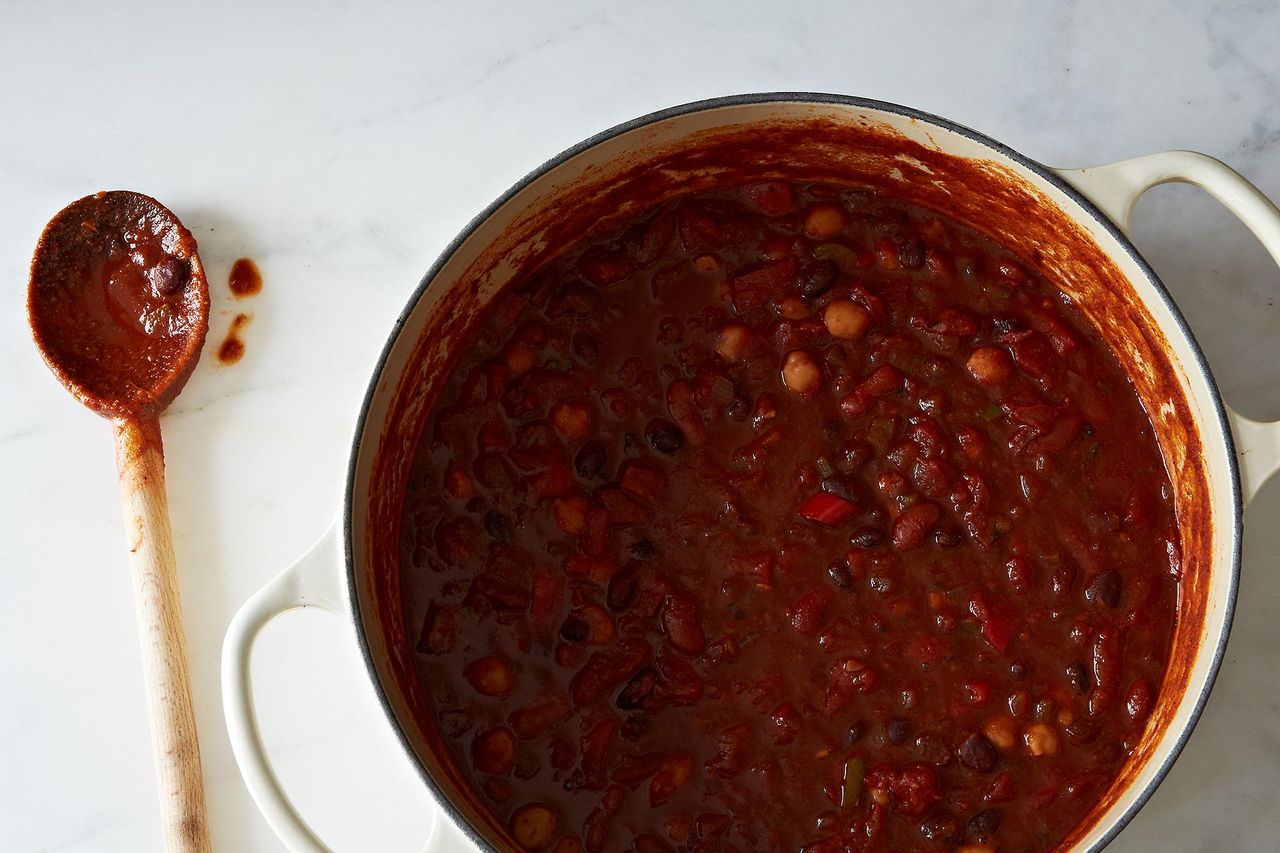
    How to Make Vegetarian (or Vegan) Chili without a Recipe

    From Food52.

    There’s something about chili -- so versatile and satisfying. Top it with cheese, sour cream, avocado, crumbled crackers, or diced fresh onions and hot peppers. Roll it into a tortilla with some rice. Pour it over a burger. It’s all good. 

    My favorite recipe is a vegetarian version from my former restaurant in Fredericksburg, Virginia. Dedicated carnivores and vegans alike happily slurped it up. If you prefer meat in yours, by all means go ahead -- it’ll be terrific. 

    I like to think of chili in terms of ratios. However you decide to proceed, and whatever ingredients you use, stick to about 2 parts diced vegetables : 2 parts cooked or canned beans : 2 parts tomatoes : a little less than 1 part (optional) added protein like tofu. This is a loose guideline, of course, but it gives you something to jump off from.

    Let’s make it happen.
    How to Make Vegetarian Chili Without a Recipe

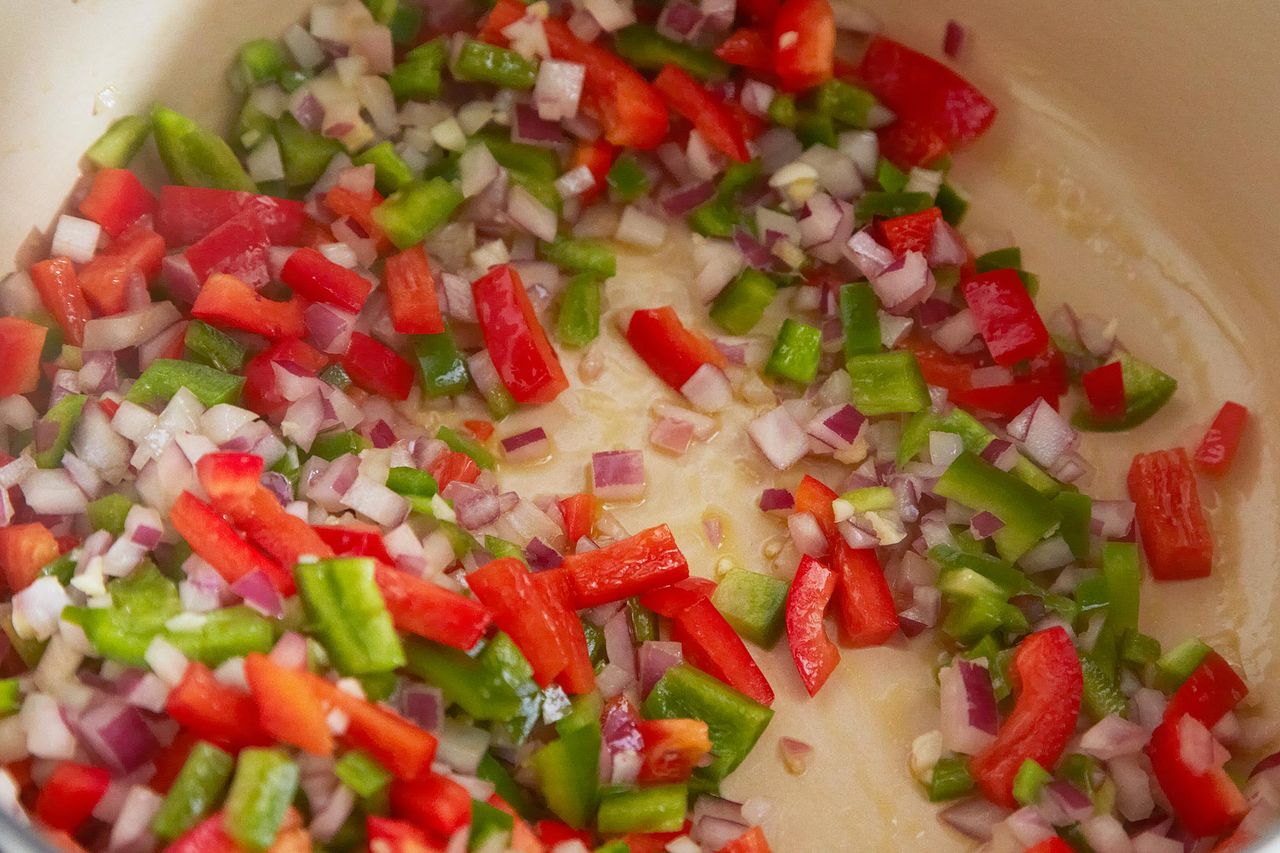
    1. In a big heavy pot, heat up a pat of butter or a glug of oil of your choosing. Sauté some diced onions, whatever combination of hot and bell peppers you like, and garlic. If you feel like some finely diced carrots, leeks, or celery, too, go for it. Add some salt and stir.
    Vegetarian Chili from Food52
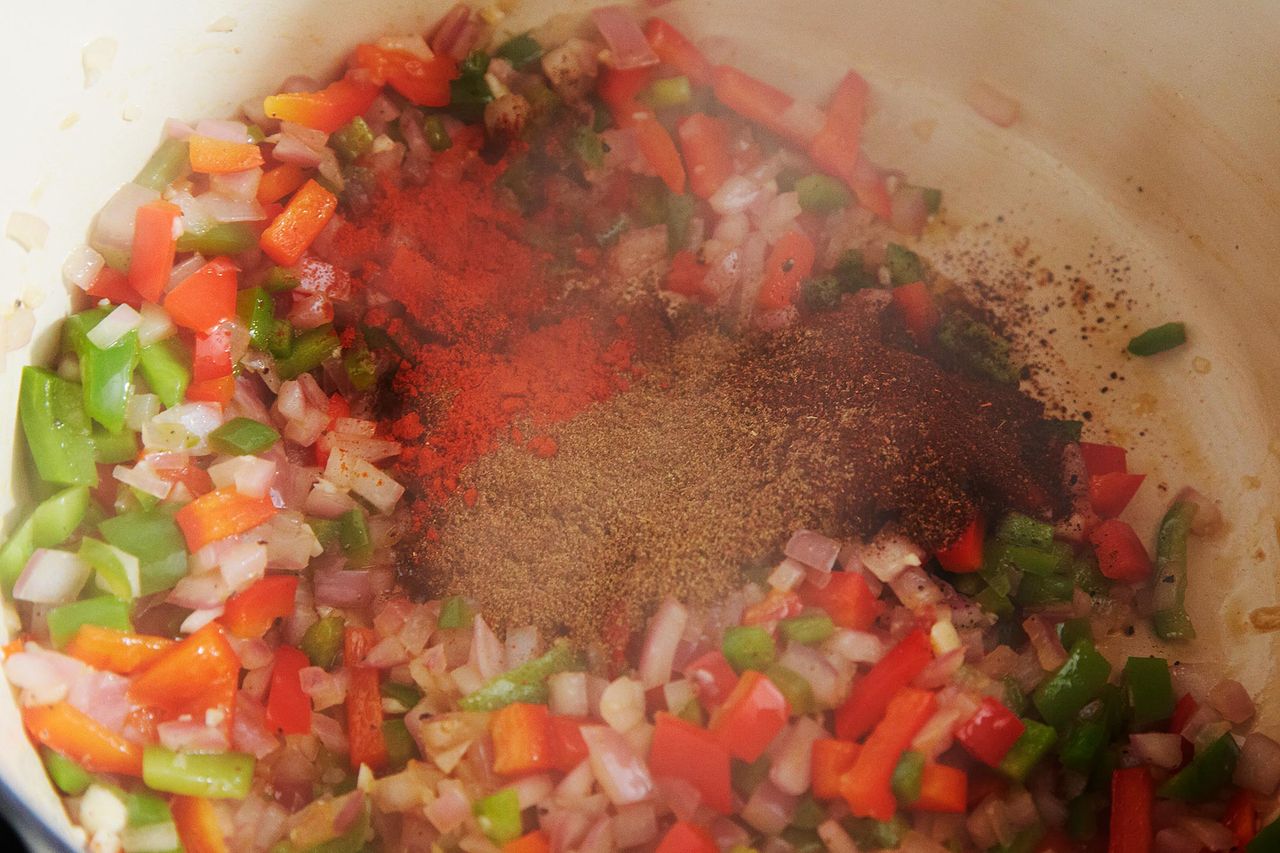
    2. Add spices. I’ve used chili powder, cumin, turmeric, smoked paprika, chipotle, and various ground peppers; you should use whatever tastes like chili to you. Use 2 to 3 times as much assorted chili powders as cumin and turmeric. This is really to taste, but start with 1/2 teaspoon of cumin per cup of tomatoes if you need a benchmark. Salt and pepper to taste. If you didn't put in fresh garlic, add garlic powder here -- shoot for about the same amount of garlic powder as cumin. 

    Vegetarian Chili from Food52
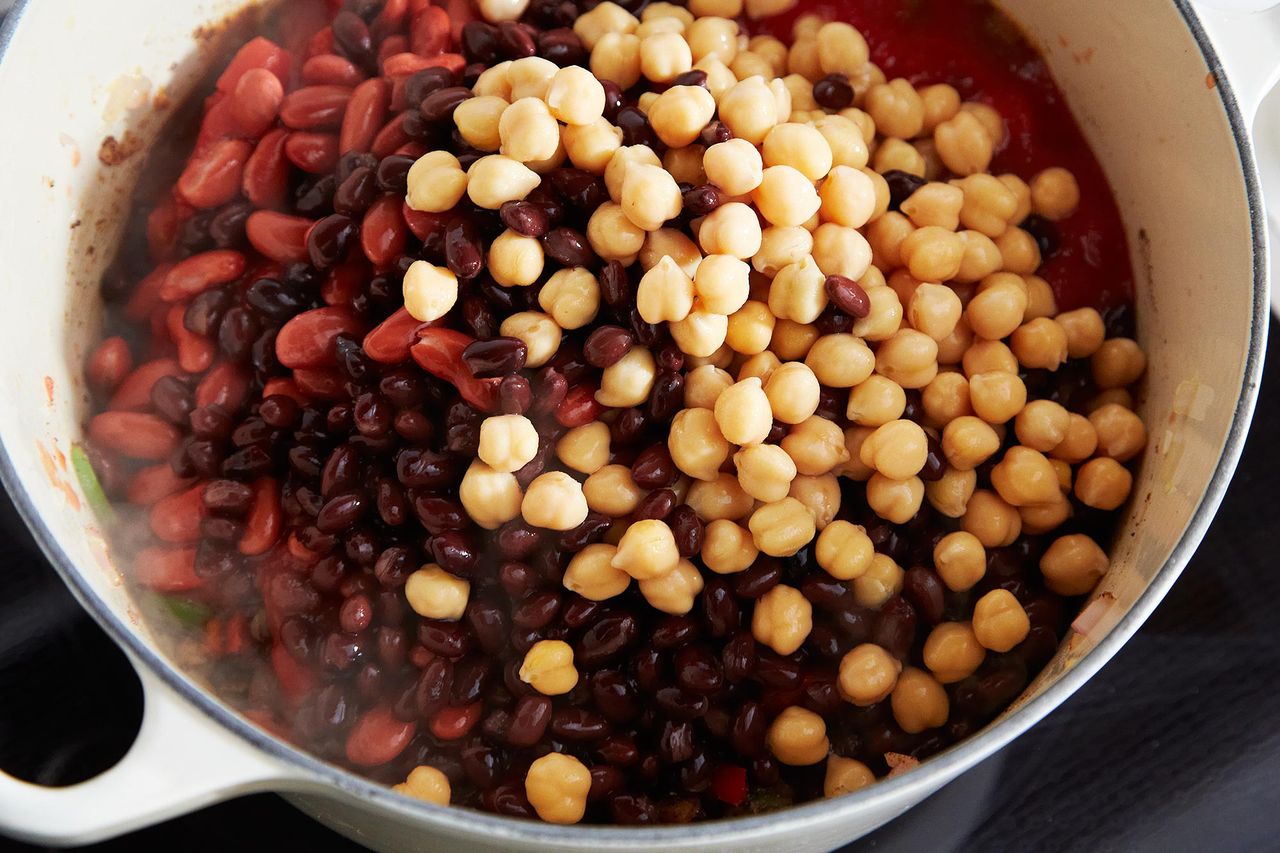
    3. Now, get your can opener ready! You’ll need beans and diced tomatoes. I love to use fire-roasted diced tomatoes and diced tomatoes with green chilis, but you can use your favorite. As for beans, I prefer a combination of kidneys, garbanzos and black beans. If you like to work with dried beans, I recommend cooking these first and then adding them now. You will probably also need to add 1 part water or stock at this point. Fill your empty tomato cans with stock or water as a measuring guideline and pour in liquid until it looks like chili. 

    Vegetarian Chili from Food52
    4. Add more protein if you like. I’m a fan of tofu, so I cut a block of extra-firm into smallish cubes and toss it in. Tip: If you freeze tofu ahead of time, then thaw, then squeeze all the water out before you use it, you’ll be blown away by the texture. 

    Vegetarian Chili from Food52
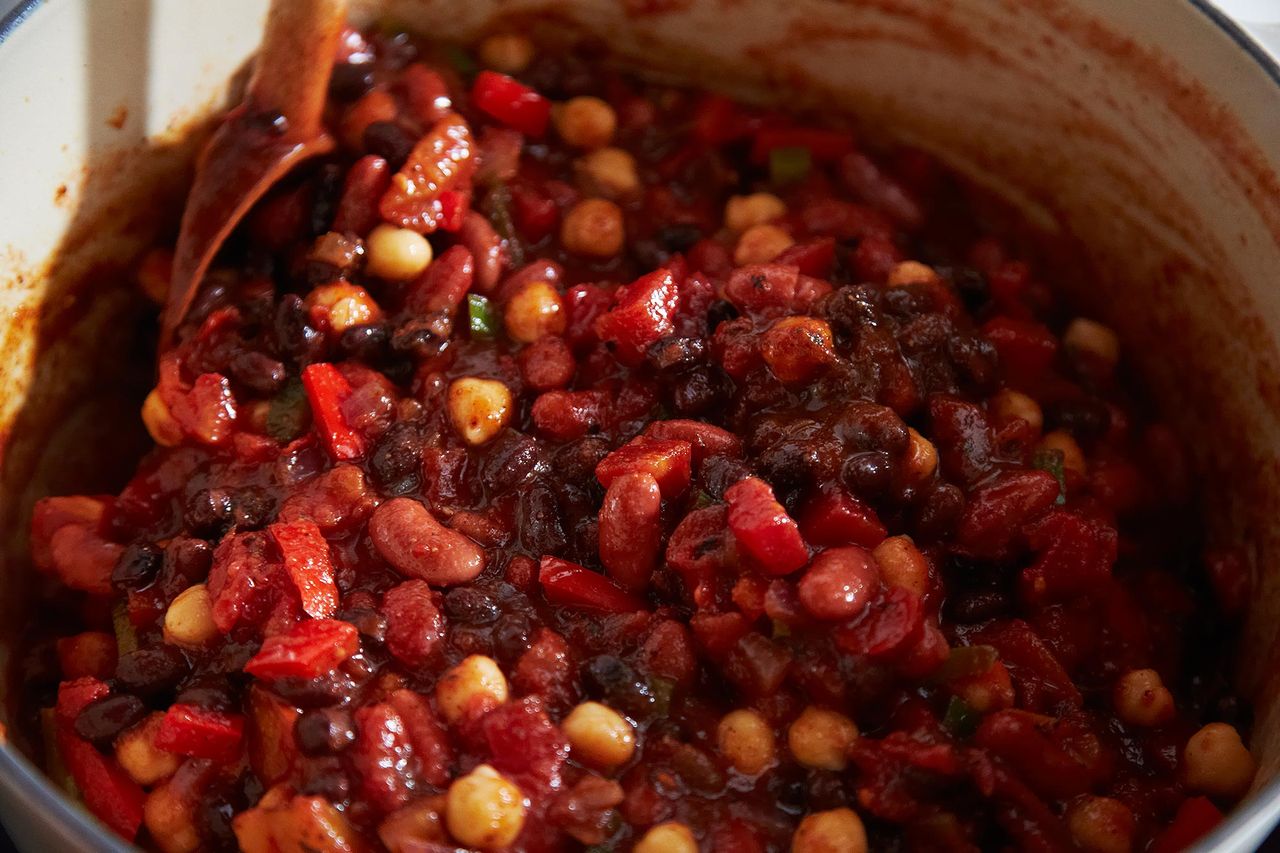
    5. Now just simmer for about an hour, mostly covered. Then add spice as needed and enjoy! Don’t forget to serve it over scrambled eggs for tomorrow’s breakfast. 

    Vegetarian Chili from Food52
    Round out your Tex-Mex menu with some other classics: